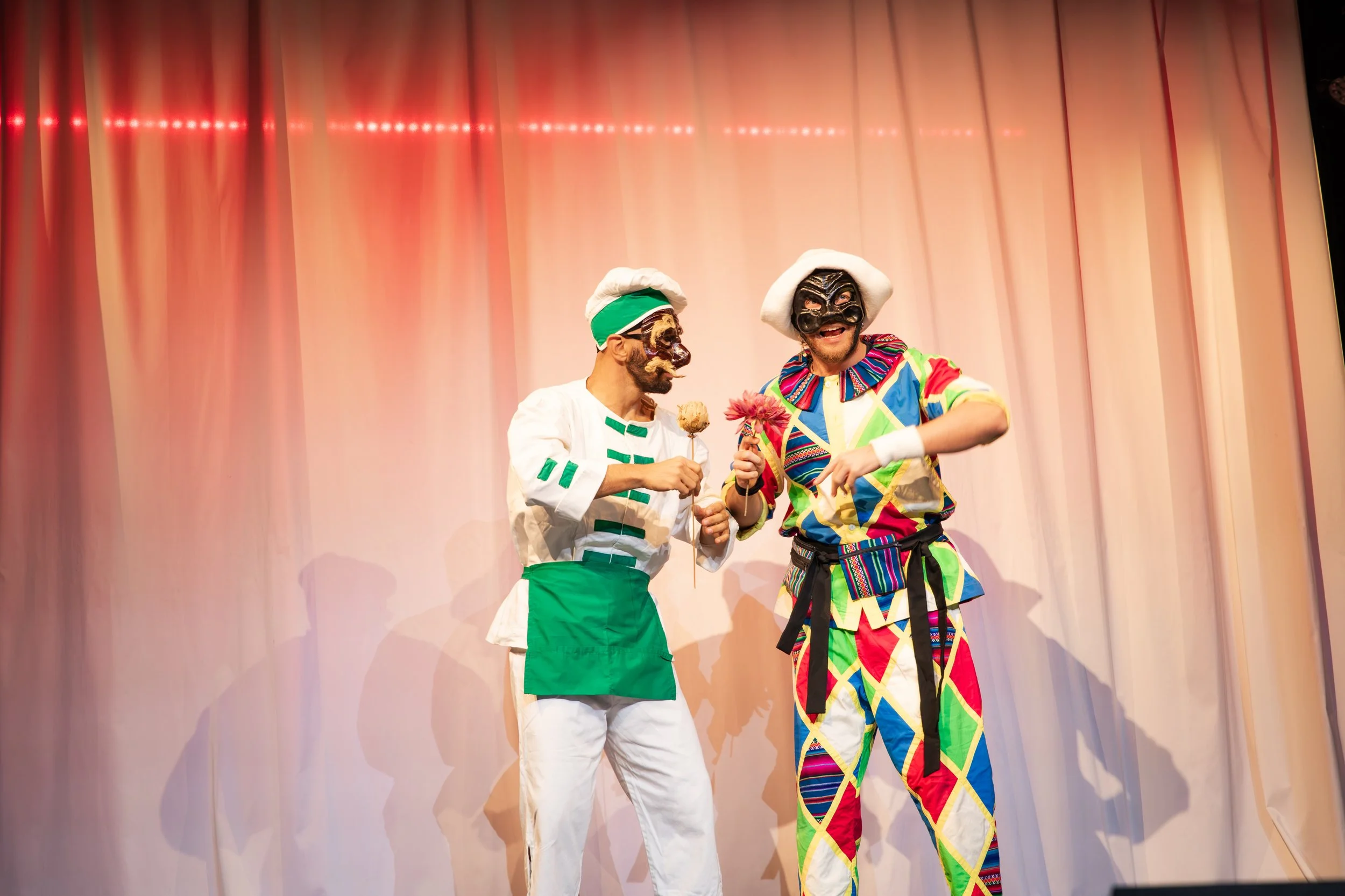
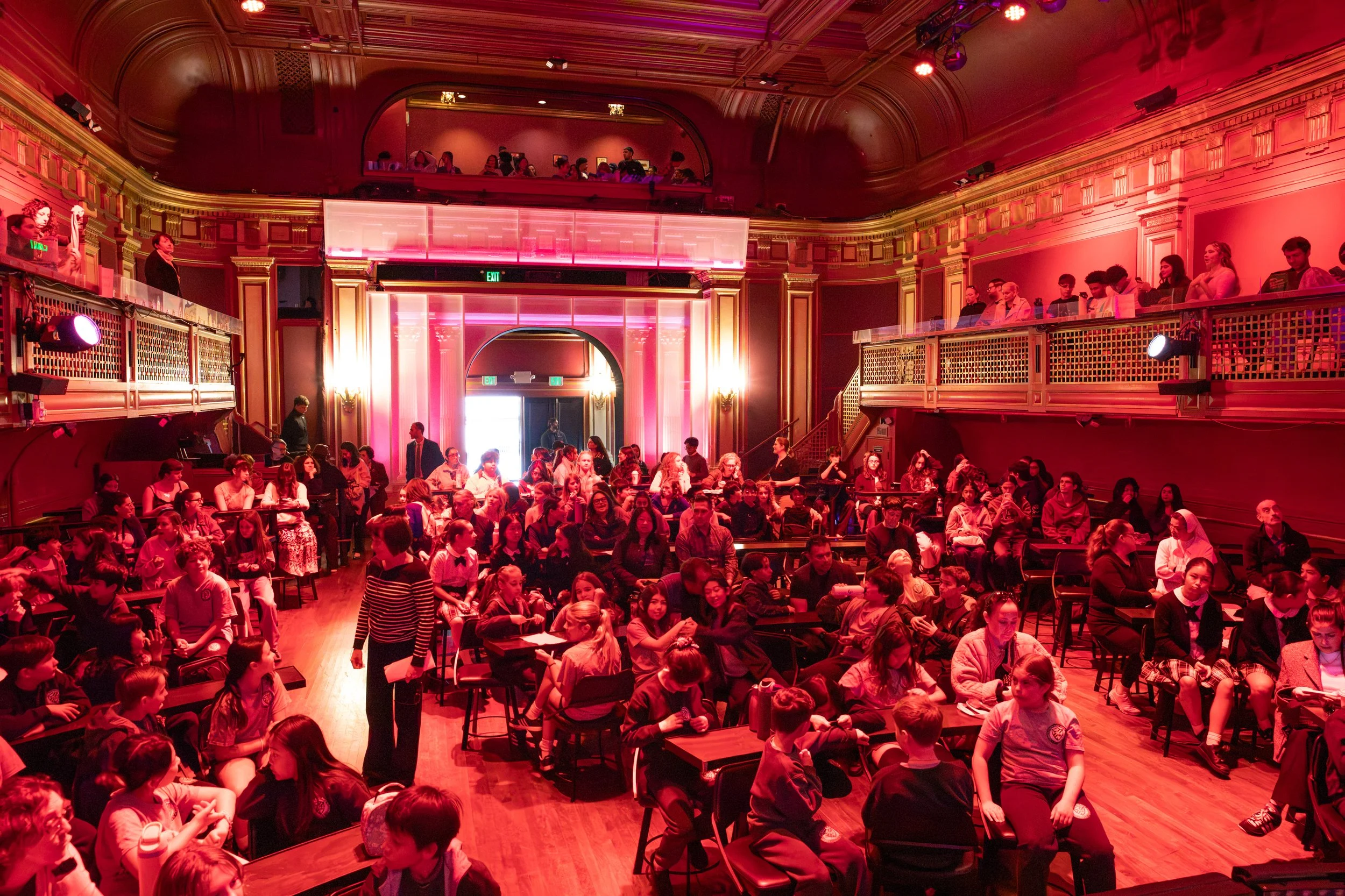
On October 20, more than 250 Italian language students from five Bay Area schools filled our historic theater at Casa Fugazi to meet Arlecchino, Brighella and Colombina live on stage. Colpi di Maschera, a modern take on Commedia dell'Arte, showed them that Italian is something you can see, hear and feel — not just read in a textbook.
There is a moment, in every good piece of theater, when an audience stops watching and starts taking part. On October 20 it happened in front of more than 250 young students of Italian, from elementary school to high school, and it happened right here, in our own theater.
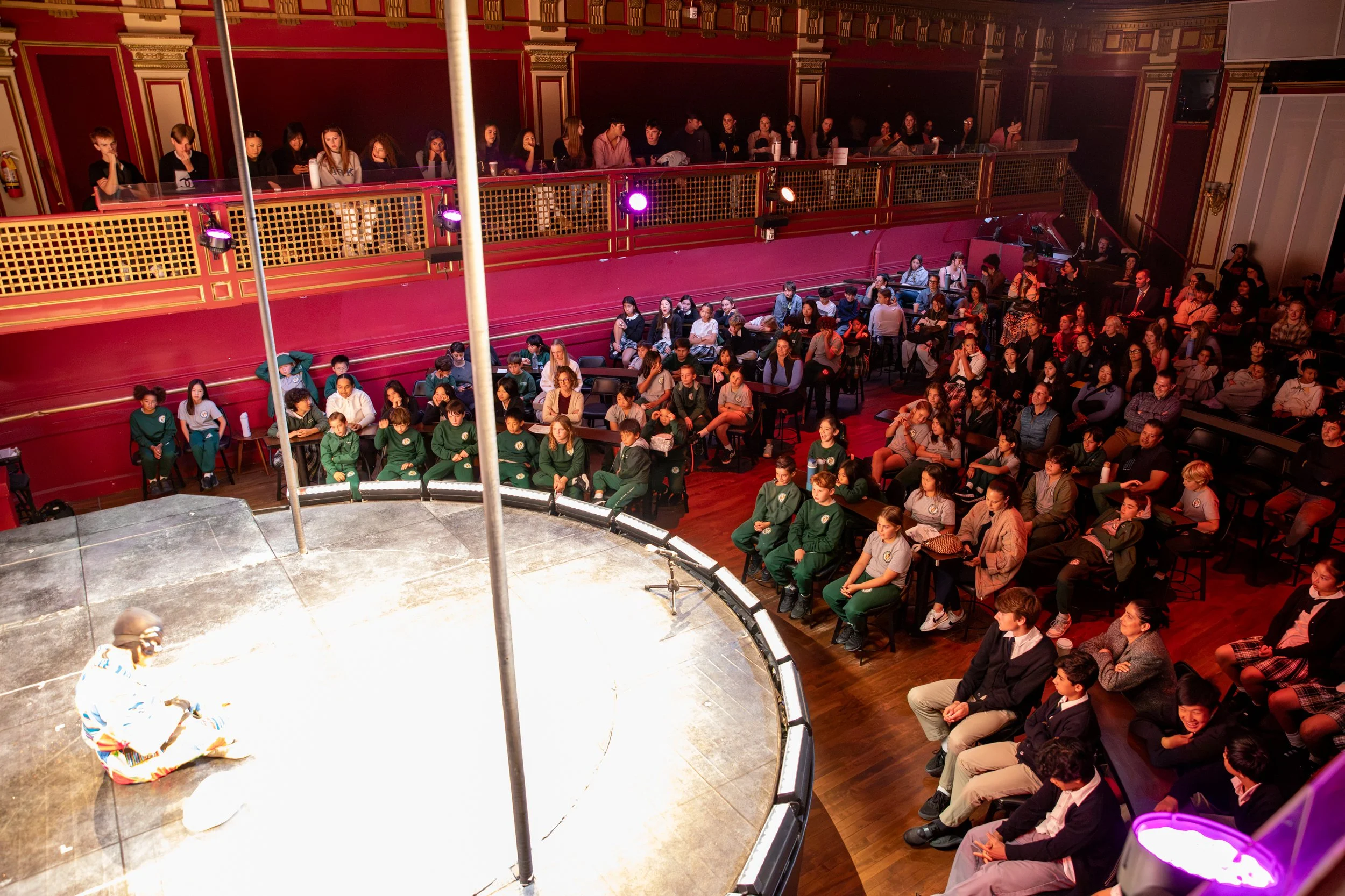
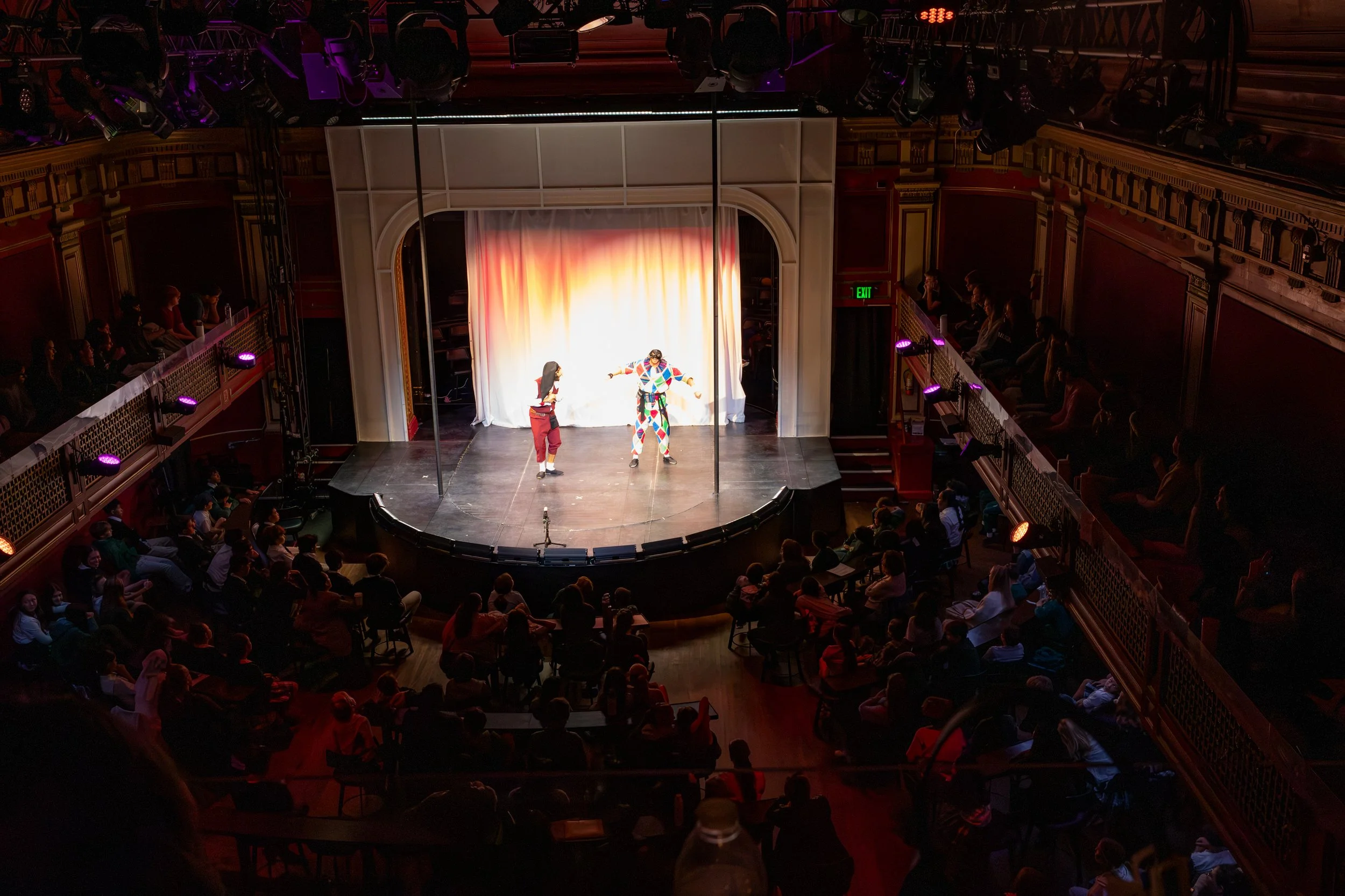
Students from Lowell High School, Saints Peter and Paul School, La Scuola International School, Burlingame High School and South San Francisco High School came to the Club Fugazi theater, inside Casa Fugazi, for a special school performance of Colpi di Maschera: a fast-paced, family-friendly show that brings the 500-year-old tradition of Commedia dell'Arte to today's audiences. For many of them, it was the first time they had seen the masked characters they had only met in pictures — up close, loud, and very much alive.
A tavern, a burned dinner, and a very confused Hamlet
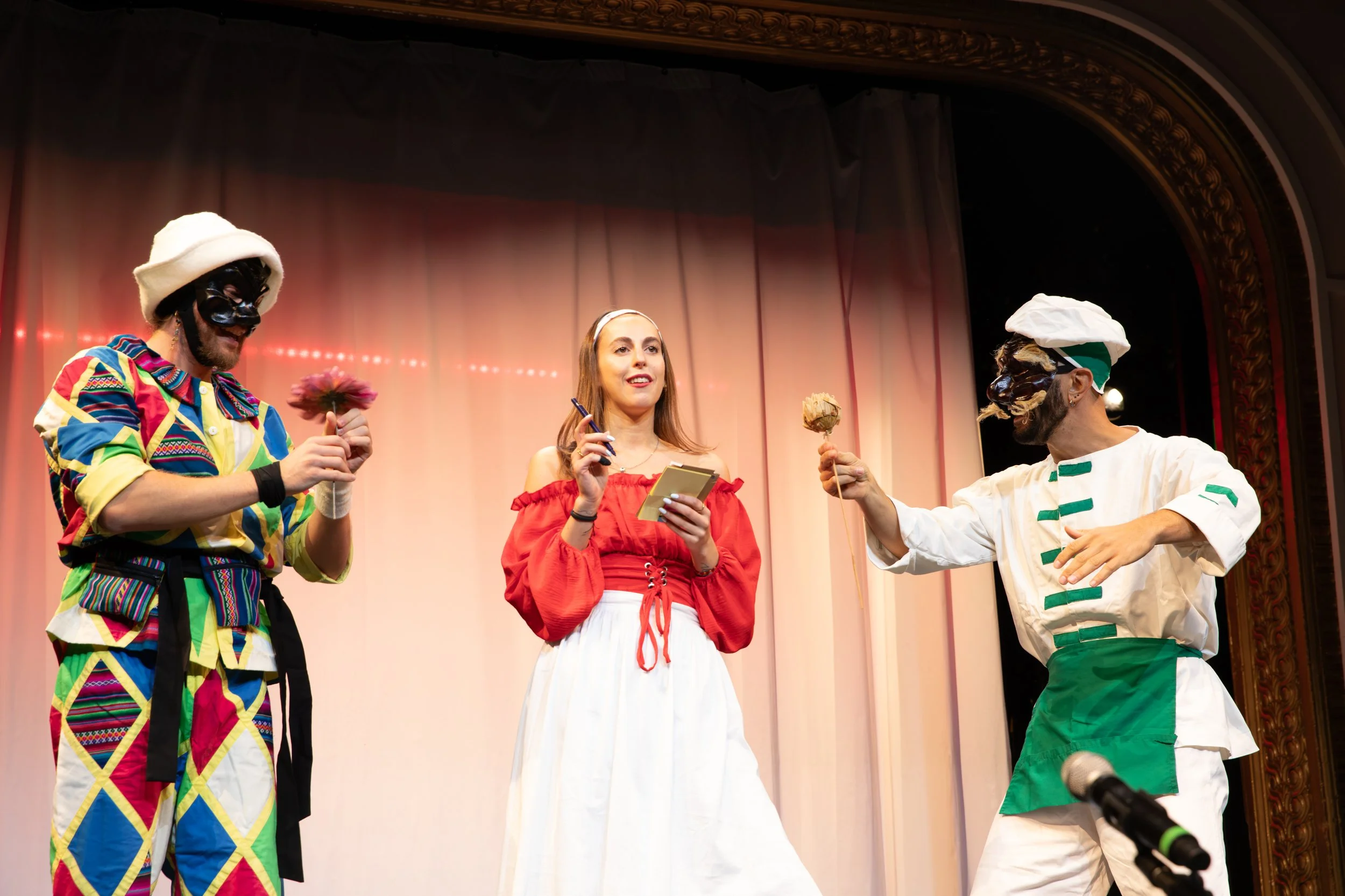
The story is simple, and that is part of its charm. Colombina runs a busy tavern with the help of two hopelessly clumsy assistants, Arlecchino and Brighella. While dinner cooks, the two try to entertain the guests — the audience — by acting out a story that mixes Shakespeare's Hamlet with Goldoni's The Servant of Two Masters. Things go wrong, then worse, and by the end dinner is burned.
Along the way, the actors wink at pop culture, from classic movie comedy to beloved Italian comedians, and pull the audience into the action. The students were not just watching a show; they were the tavern's guests, and they were expected to react.
Italian you can see
Commedia dell'Arte has always been a theater of the body. A frightened character's knees shake; a proud one walks with his chest out; a single gesture can say more than a full sentence. That is exactly why it works so well for students learning Italian. Even when a word slipped by, the meaning never did.
The show also carried a lesson that no grammar book can teach: Italy speaks with many voices. Arlecchino comes from Bergamo, Colombina from Venice, and Brighella brings the accents of the South. Together, they reminded the students that the language they are learning is rooted in a mosaic of regions, dialects and traditions — the same mosaic that Italian immigrants brought to San Francisco more than a century ago.
From a basement tavern in Puglia to California
Colpi di Maschera is written, directed and performed by Nicola Adobati and Domenico Piscopo, with Martina Cavagnoli. Nicola and Domenico met as students at a drama academy in Rome, where they became the two classmates who fell in love with mask work. Years later, during the pandemic, when nobody knew if theaters would ever reopen, they started building a show of their own — encouraged, as the story goes, by Domenico's mother. Their American tour, which includes schools and universities across several states, is the realization of a dream they first joked about as young actors.
Why this matters to ICS
For more than a century, Italian Community Services has worked to keep our community connected — across generations and across the ocean. Supporting young people who study Italian is a big part of that mission: through the ICS Riccio Educational Grant, ICS helps Bay Area schools keep their Italian programs alive and bring culture beyond the classroom.
It was especially meaningful to see these students laughing inside Casa Fugazi. Built in 1913 as a gift to San Francisco's Italian community, this building has been a home for Italian culture in North Beach for generations, and it is home to ICS today. Some of these schools are long-time friends of ICS and recipients of our Riccio Educational Grant; for others, this was their first visit. We hope it will not be the last.
Seeing more than 250 young people laugh at a tradition rooted in 16th-century Italy reminds us of something hopeful: our heritage belongs not just in museums, but in the lives of new generations. It is alive, it is funny, and it brings people together.
Grazie!
This morning was made possible by the Consulate General of Italy in San Francisco, the Istituto Italiano di Cultura of San Francisco, the Leonardo da Vinci Society, the SF Museo Italo Americano and Club Fugazi Experiences, as part of the XXVI World Week of the Italian Language. A heartfelt thank you to Domenico Piscopo, Nicola Adobati and Martina Cavagnoli, as well as to every teacher who brought their class and works every day to keep the Italian language alive in our schools.
Oltre 250 studenti della Bay Area incontrano la Commedia dell'Arte
Il 20 ottobre più di 250 studenti di italiano di cinque scuole della Bay Area hanno riempito il nostro storico teatro di Casa Fugazi per incontrare dal vivo Arlecchino, Brighella e Colombina. Colpi di Maschera, una rilettura moderna della Commedia dell'Arte, ha mostrato loro che l'italiano si può vedere, ascoltare e sentire, e non solo leggere su un libro.
In ogni bello spettacolo arriva un momento in cui il pubblico smette di guardare e comincia a partecipare. Il 20 ottobre è successo davanti a più di 250 giovani studenti di italiano, dalle elementari alle superiori, ed è successo proprio qui, nel nostro teatro.
Gli studenti di Lowell High School, Saints Peter and Paul School, La Scuola International School, Burlingame High School e South San Francisco High School sono venuti al teatro Club Fugazi, dentro Casa Fugazi, per una replica speciale di Colpi di Maschera dedicata alle scuole: uno spettacolo dal ritmo serrato, adatto a tutta la famiglia, che porta al pubblico di oggi una tradizione lunga 500 anni. Per molti di loro era la prima volta che vedevano le maschere conosciute solo nelle illustrazioni: da vicino, chiassose e piene di vita.
Una locanda, una cena bruciata e un Amleto molto confuso
La storia è semplice, ed è proprio questo il suo fascino. Colombina gestisce una locanda sempre piena con l'aiuto di due assistenti irrimediabilmente maldestri, Arlecchino e Brighella. Mentre la cena cuoce, i due cercano di intrattenere gli ospiti, cioè il pubblico, recitando una storia che mescola l'Amleto di Shakespeare con Il servitore di due padroni di Goldoni. Le cose vanno male, poi peggio, e alla fine la cena è bruciata.
Strada facendo, gli attori strizzano l'occhio alla cultura pop, dalle grandi commedie del cinema ai comici italiani più amati, e trascinano il pubblico nell'azione. Gli studenti non stavano solo guardando uno spettacolo: erano gli ospiti della locanda, e dovevano reagire.
L'italiano che si vede
La Commedia dell'Arte è da sempre un teatro del corpo. A un personaggio spaventato tremano le ginocchia; uno orgoglioso cammina impettito; un solo gesto può dire più di una frase intera. Ecco perché funziona così bene con chi studia l'italiano: anche quando sfuggiva una parola, il significato arrivava sempre.
Lo spettacolo ha portato anche una lezione che nessun libro di grammatica può insegnare: l'Italia parla con molte voci. Arlecchino viene da Bergamo, Colombina da Venezia e Brighella porta gli accenti del Sud. Insieme hanno ricordato agli studenti che la lingua che stanno imparando affonda le radici in un mosaico di regioni, dialetti e tradizioni: lo stesso mosaico che gli emigrati italiani hanno portato a San Francisco più di un secolo fa.
Da una tavernetta in Puglia alla California
Colpi di Maschera è scritto, diretto e interpretato da Nicola Adobati e Domenico Piscopo, con Martina Cavagnoli. Nicola e Domenico si sono conosciuti da studenti in un'accademia di teatro a Roma, dove erano gli unici due compagni di corso innamorati del lavoro con la maschera. Anni dopo, durante la pandemia, quando nessuno sapeva se i teatri avrebbero mai riaperto, hanno cominciato a costruire uno spettacolo tutto loro, incoraggiati, si racconta, dalla mamma di Domenico. La loro tournée americana, che tocca scuole e università in diversi stati, realizza un sogno di cui scherzavano da giovani attori.
Perché è importante per ICS
Da più di un secolo Italian Community Services lavora per tenere unita la nostra comunità, tra le generazioni e da una sponda all'altra dell'oceano. Sostenere i giovani che studiano l'italiano è una parte importante di questa missione: con l'ICS Riccio Educational Grant, ICS aiuta le scuole della Bay Area a mantenere vivi i loro programmi di italiano e a portare la cultura oltre l'aula.
È stato particolarmente emozionante vedere questi ragazzi ridere dentro Casa Fugazi. Costruito nel 1913 come dono alla comunità italiana di San Francisco, questo edificio è da generazioni una casa per la cultura italiana a North Beach, e oggi è la casa di ICS. Alcune di queste scuole sono amiche di lunga data di ICS e ricevono il nostro Riccio Educational Grant; per altre era la prima visita. Speriamo che non sia l'ultima.
Vedere più di 250 ragazzi ridere davanti a una tradizione nata nell'Italia del Cinquecento ci ricorda qualcosa di prezioso: il nostro patrimonio non appartiene solo ai musei, ma alla vita delle nuove generazioni. È vivo, è divertente e unisce le persone.
Grazie!
Questa mattinata è stata resa possibile dal Consolato Generale d'Italia a San Francisco, dall'Istituto Italiano di Cultura di San Francisco, dalla Leonardo da Vinci Society, dal SF Museo Italo Americano e da Club Fugazi Experiences, nell'ambito della XXVI Settimana della Lingua Italiana nel Mondo. Un grazie di cuore a Domenico Piscopo, Nicola Adobati e Martina Cavagnoli, e a tutti gli insegnanti che hanno portato le loro classi e che ogni giorno lavorano per tenere viva la lingua italiana nelle nostre scuole.